Blog
What Is a Freshwater Pearl? How Does It Differ from an Ocean Pearl?
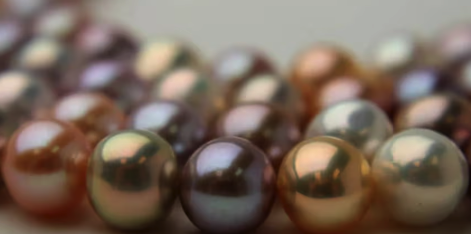
Regarded in every era as a symbol of elegance and grace, the pearl is one of nature's most beautiful gifts. This precious gem can form both in mussels living in lakes and rivers and in oysters in the oceans. We have explained the differences between freshwater pearls and ocean pearls for you, from how they form to their color and luster.
What Is a Freshwater Pearl?
Freshwater pearls grow in mussels in lakes, rivers and slow-moving water; most of those sold today come from lake and pond farms in Asia. Their secret is numbers. A grower can place twenty or thirty small pieces of tissue, sometimes more, inside a single mussel, and each piece may become a pearl.
That is why one harvest holds such a mix: near-perfect rounds next to ovals, drops and baroque pearls with shapes all their own. Most are white or cream, some a warm pink, and now and then a lavender pearl turns up.
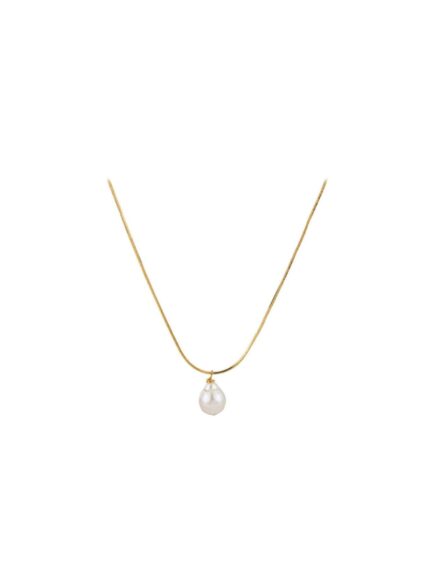
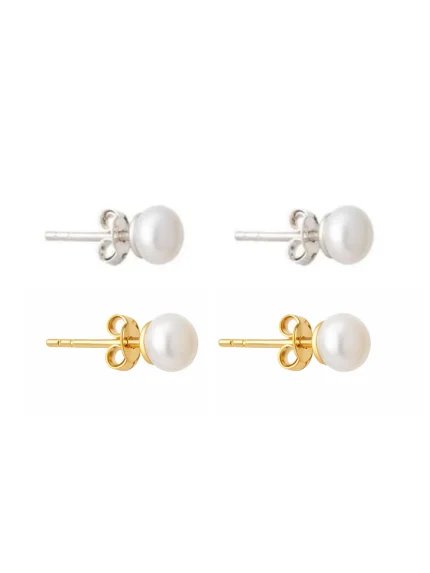

Most of the pearls in the Ecru Atelier collection are natural freshwater pearls, and you'll find the simplest round ones in our pearl ball earrings collection.
Is a Freshwater Pearl a Real Pearl?
Yes, a freshwater pearl is a real pearl. It forms inside a living creature as layers of nacre build up over one another; it is not a glass, plastic or painted bead. The confusion usually comes from the term "cultured pearl". Almost all the pearls used in jewelry today, whether freshwater or ocean pearls, are cultured pearls: a person starts the process, and the mussel or oyster grows the pearl itself. Cultured pearls are also accepted as real pearls, and this is what "natural pearl" means in our product descriptions: not an imitation, but a pearl made by a living creature.
Freshwater pearls, also known as "pond pearls", usually have no nucleus at their center; the pearl is made of nacre all the way through. This structure helps a freshwater pearl keep its original look for a long time with the right care. The products to be careful with are those sold as "shell pearls" or "mother-of-pearl beads"; these are beads cut from oyster shell and given the look of a pearl. To be sure a pearl is real, we recommend choosing trusted brands. You can find methods to try at home in our How to Tell If a Pearl Is Real post.
What Is an Ocean Pearl? Akoya, Tahiti, and South Sea
The ocean pearl, also known as the saltwater pearl, forms in oysters living in salt water, and in jewelry it is mostly seen in three types. Akoya pearls are mostly cultivated off the coasts of Japan; usually between six and eight millimeters, these round and lustrous pearls are closely associated with the timeless look of the classic single-strand pearl necklace. Tahitian pearls from French Polynesia are known for their dark colors, which range from soft gray to green and aubergine purple, and on to near-black tones. South Sea pearls, cultivated off Australia, Indonesia and the Philippines, are the largest of the three types and, with their creamy, soft surfaces, are regarded as among the most valuable pearls.
Ocean pearls have the appearance that most people envision when they hear the word “pearl”: round, uniform, and mirror-like in their luster.
Freshwater Pearl and Ocean Pearl Comparison Chart
You can see the main differences between the two types of pearls in the table below.
| Freshwater pearls | Ocean pearls | |
|---|---|---|
| Where they grow | Lakes, rivers, pond farms | Ocean and saltwater farms |
| Grown by | Freshwater mussels | Saltwater oysters |
| Pearls per shell | Dozens | Usually one |
| Inside | Mostly solid nacre | Nacre layered over a bead |
| Shape | From round to baroque, very varied | Mostly round |
| Color | White, cream, pink, lavender | Akoya white and cream, Tahitian dark tones, South Sea white and gold |
| Luster | Soft, silky | Sharper, mirror-like |
| Price | A wide range, depending on size, shape and luster | High, depending on type and size |
| Use | Everyday wear and layered outfits | Classic, matched strands |
Where Does the Price Difference Come From?
It mostly comes down to the oyster. A saltwater oyster usually grows one pearl at a time, often over a year or more, out in open water where farming is slow and demanding. Fewer pearls per harvest means a higher price for each. A freshwater mussel, carrying dozens of pearls in a single shell, makes a pearl of the same size much easier to find.
Among freshwater pearls themselves, the bigger, rounder and brighter the pearl, and the cleaner its surface, the more it's worth. Baroque pearls play by different rules; their charm is the unusual shape. Metal matters as well; for more on silver, see our What Is 925 Sterling Silver post.
Which One Should You Choose?
Ask yourself where the pearls will go. To the office, to dinner, packed for a holiday? Then freshwater pearls, with their mix of shapes and shades, are the practical choice, and adding a piece every year or so is easy. A single strand of perfectly matched pearls for the big occasions is another matter; that has traditionally been the ocean pearl's job. With proper care, either will last for years.
Freshwater pearls are at the heart of the Ecru Atelier collection, and their shapes give us room to design freely. See the range in our pearl necklace and pearl earrings collections.
In short
A freshwater pearl grows in a mussel, in a lake, river or pond farm, and one shell can hold dozens of them. An ocean pearl grows in a saltwater oyster, usually one at a time. Both are real pearls. Freshwater pearls come in more shapes and shades and are easy to wear every day; ocean pearls are prized for the round, mirror-bright look of a classic strand. Whichever you prefer, the Ecru Atelier collection has a freshwater piece to match your style.